
Relocation
Why Move to New Braunfels?
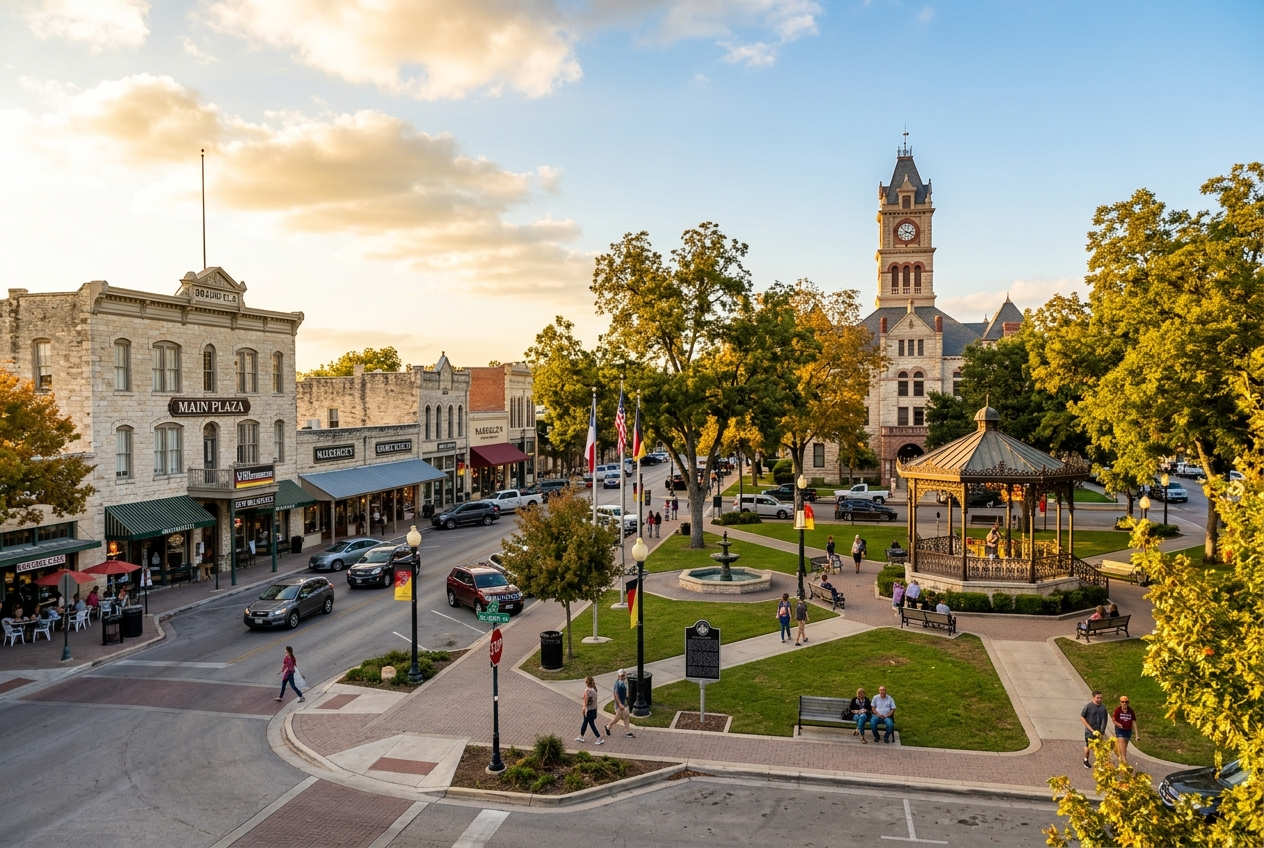
New Braunfels grew 40.56% from 2020 to 2026, making it one of the fastest-growing cities in the country. Here's why.
New Braunfels grew from 91,683 in 2020 to 116,477 today, a 40.56% increase. The combination of Texas's 0% state income tax, a cost of living near 1.1x national average, A-rated Comal ISD schools, and proximity to both Austin (~52 miles, ~53 minutes) and San Antonio makes it one of the most relocator-friendly markets in Texas. Two rivers, Hill Country culture, and a deep employer base do the rest.
40% Growth
Growth
How fast is New Braunfels growing?
New Braunfels grew from 91,683 residents in 2020 to 116,477 by 2024, a 40.56% expansion in roughly four years. That puts it consistently inside the U.S. Census Bureau's top-five list of fastest-growing American cities, and it's one of only a handful of mid-sized cities in the country posting double-digit percentage growth two census cycles in a row. The broader San Antonio–New Braunfels metro reached 2.813 million (San Antonio–New Braunfels metro, 2025) in 2025, anchoring Comal County as one of the fastest-growing counties in Texas.
The growth is driven almost entirely by in-migration, not births. Roughly two-thirds of new arrivals come from outside Texas, with California, Illinois, the Pacific Northwest, and the Northeast supplying the largest contingents. Inside Texas, Austin's overflow accounts for most of the rest. What makes New Braunfels different from a typical boomtown is that the growth has been balanced, new master-planned communities, infill in the historic core, and luxury custom builds in Vintage Oaks and Copper Ridge are all happening at once, so price points span $300K starter homes through $2M-plus Hill Country estates.
Sources: U.S. Census, World Population Review
Browse Neighborhoods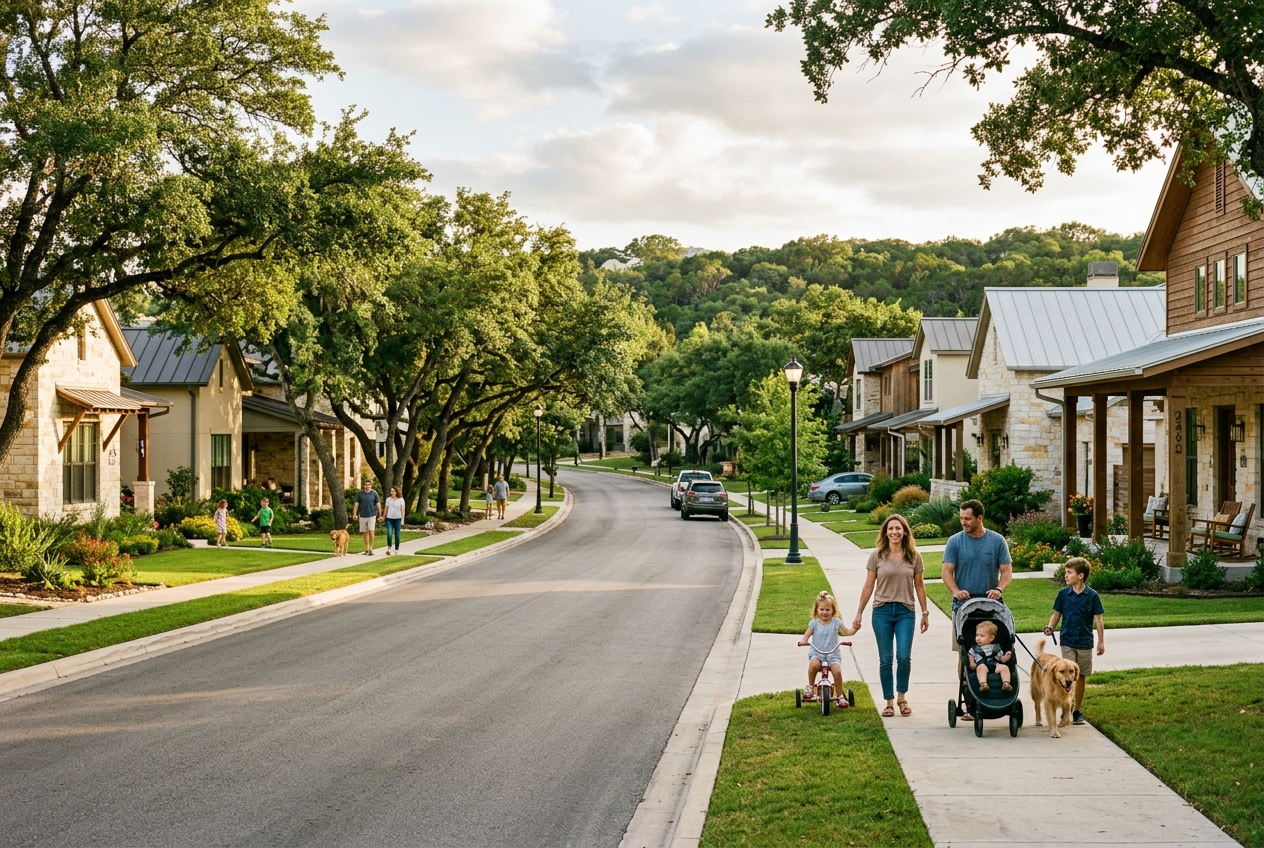
0% Income Tax
Tax Savings
Zero state income tax. Real savings.
Texas charges 0% state income tax. For a household relocating from California, where the top marginal rate exceeds 13%, the annual savings can run $15,000 to $25,000 or more depending on income. Illinois, New York, and New Jersey buyers see similar benefits in the $8,000 to $20,000 range. Even relocators from "lower tax" states like Colorado or Arizona typically come out ahead. Sales tax in New Braunfels caps at 8.25% (6.25% state plus a 1.0% New Braunfels city city add-on and local options), which is in line with most U.S. metros.
Texas does have higher property taxes than many states because it has no income tax, so the comparison isn't apples-to-apples. The good news for relocators: Texas's $140,000 school district homestead exemption, plus local-option exemptions and senior freezes, take a meaningful bite out of the bill on a primary residence. Most California and Illinois relocators we work with still net thousands of dollars per year ahead after running the full tax math, and the difference compounds substantially over a 10-year hold.
Source: AARP Texas Tax Guide
See the Full Tax Math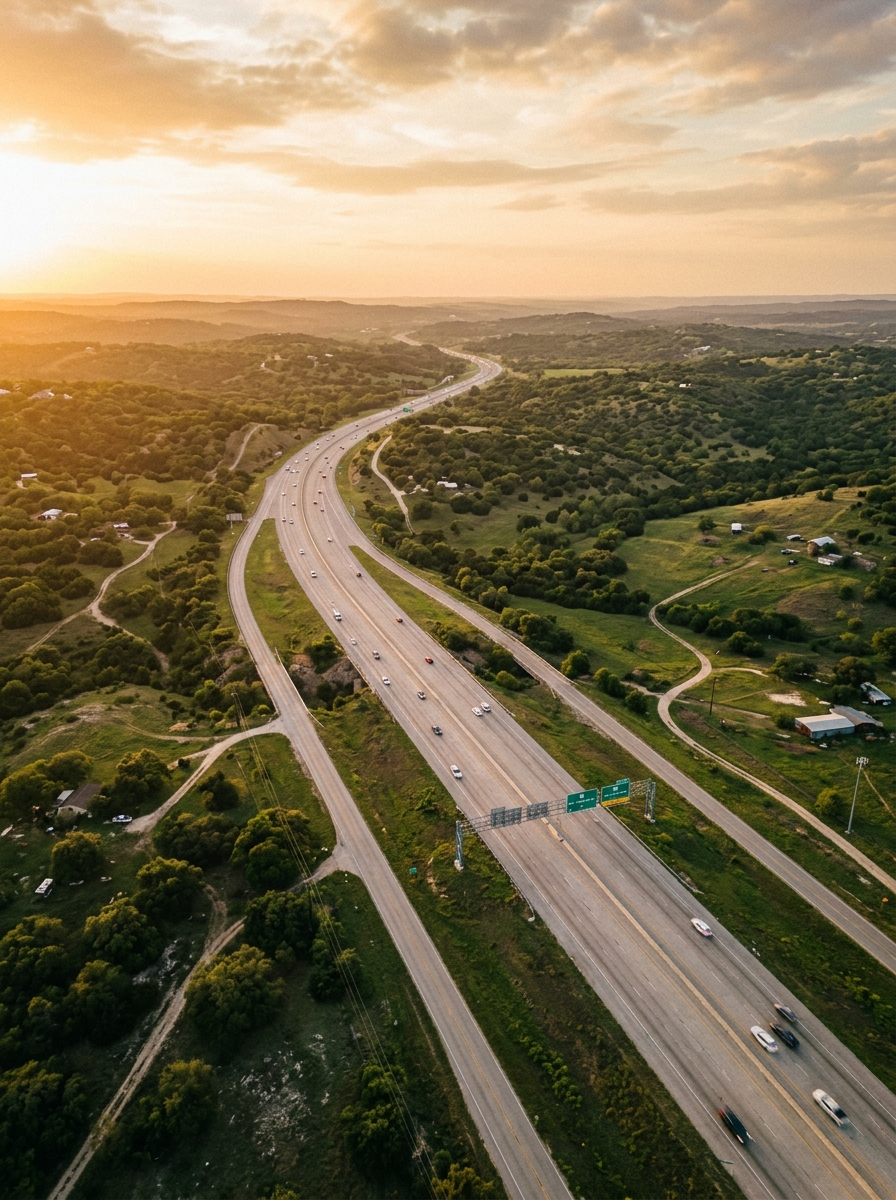
Between Two Metros
Location
Between Austin and San Antonio.
New Braunfels sits directly on I-35 between Austin and San Antonio, with Austin-Bergstrom International Airport about ~52 miles, ~53 minutes from the city core. That positioning is the single biggest practical advantage New Braunfels has over comparable Hill Country towns. Buyers looking at Buda, Kyle, San Marcos, or Dripping Springs as Austin overflow regularly find that for the same dollar, New Braunfels offers more square footage, more land, newer construction, and a more established downtown core with real history.
For families with one spouse working in Austin and another in San Antonio, New Braunfels is one of the only locations where neither commute is brutal. Hybrid and remote workers, now the majority of relocators we see, get the best of both metros without choosing one. And because the city is roughly halfway, weekend access to Austin culture, San Antonio's medical center and missions, and Hill Country wineries is essentially equal in every direction.
Source: Rome2Rio
Things to Do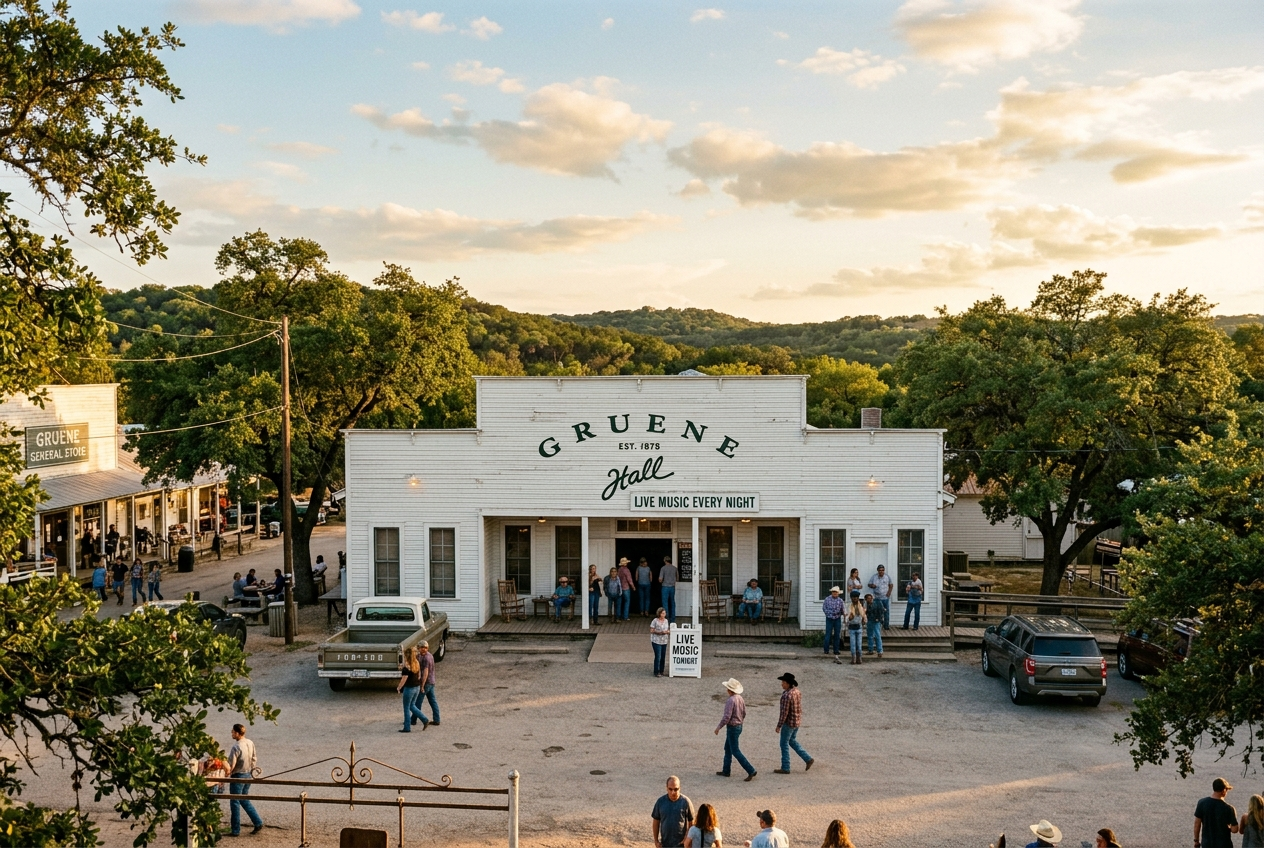
Since 1878
Lifestyle
Hill Country living. Not just a tagline.
Two rivers run through New Braunfels: the spring-fed Comal (the shortest navigable river in the country, and reliably 70°F year-round) and the longer Guadalupe, which runs out of Canyon Lake and is the heart of Hill Country tubing culture. Schlitterbahn, the largest waterpark in Texas, sits on the Comal. Gruene Hall, built in 1878, is the oldest continually operating dance hall in Texas and still hosts top country, Americana, and Texas singer-songwriter acts most nights.
Beyond the postcard items, what relocators usually mention after a year is the day-to-day texture: an actual downtown with restaurants and music, Wurstfest each fall (one of the largest German heritage festivals in the country), Canyon Lake fifteen minutes north for boating and lakeside dining, and dozens of Hill Country wineries within a 30-mile drive. The pace is small-city Texas, friendlier than Austin, less corporate than San Antonio, more authentic than the typical master-planned suburb.
Explore Things to Do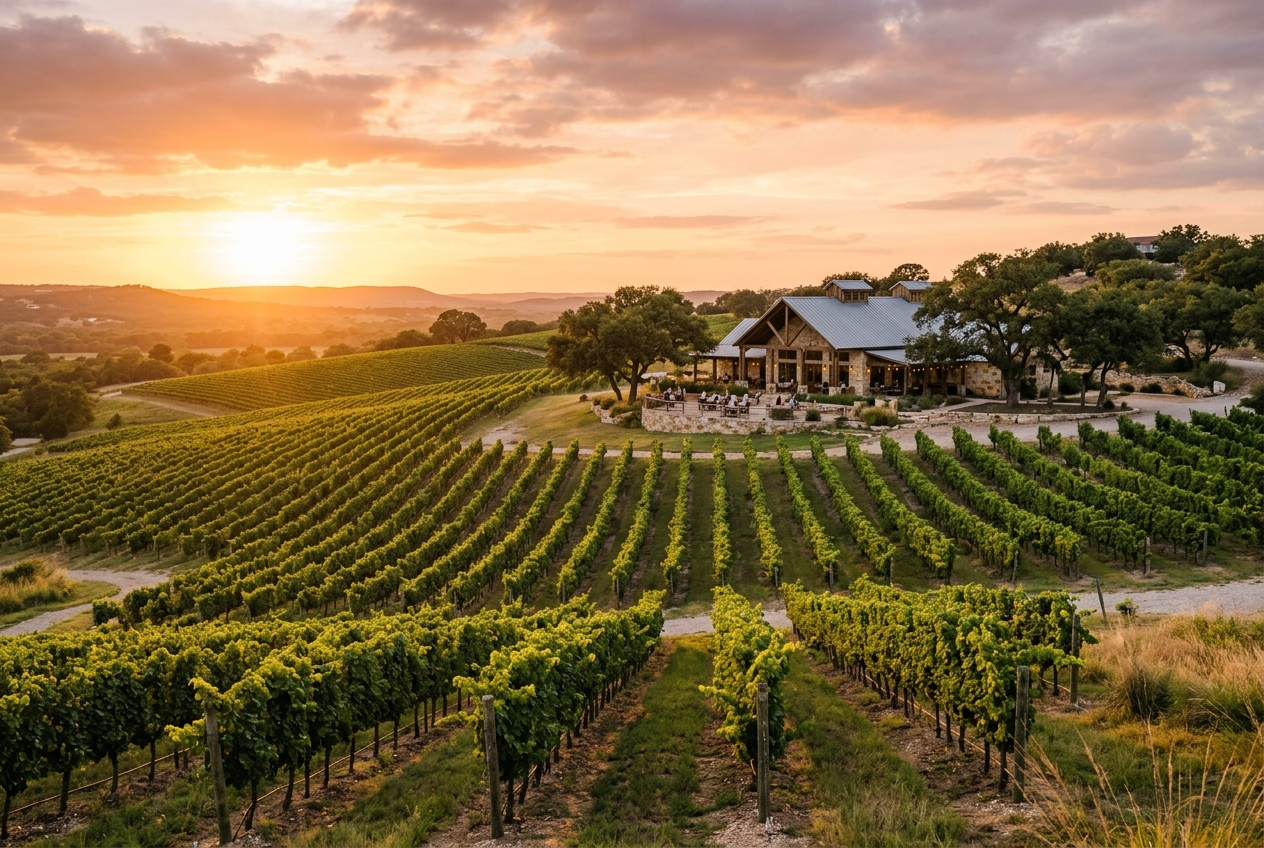
Strong Economy
Employment
A real economy. Not just tourism.
Top employers include CHRISTUS Santa Rosa, City of New Braunfels, Comal County, Comal ISD, New Braunfels ISD, New Braunfels Utilities, along with HD Supply, Hunter Industries, IBEX Global, and Resolute Health Hospital. Healthcare and the public sector form the backbone, with manufacturing, utilities, and hospitality filling out the rest. Hospitality alone accounts for roughly 31% of city employment thanks to Schlitterbahn, river outfitters, and the Gruene tourism corridor, that creates a tight summer labor market and a steady year-round economy.
The biggest shift in the last five years has been remote work. A large share of new arrivals are software, finance, marketing, and creative professionals keeping their existing jobs and simply trading a Bay Area, Chicago, or Denver address for a New Braunfels one. The city has invested in fiber and coworking infrastructure to support that. For buyers whose income doesn't depend on the local labor market, the question shifts from "are there jobs here?" to "what will my quality of life look like?", and that question almost always answers itself after one visit.
Source: NB Chamber
Talk to GlenRelocation FAQ
Common Relocation Questions
The questions Glen hears most often from relocators considering a move to New Braunfels.
Is New Braunfels really one of the fastest-growing cities in the country?
Yes. The U.S. Census shows New Braunfels grew from 91,683 in 2020 to 116,477 by 2024, a 40.56% jump in roughly four years. That growth rate is several times the national average and consistently lands New Braunfels in the top handful of fastest-growing U.S. cities. The broader San Antonio–New Braunfels metro now sits at 2.813 million (San Antonio–New Braunfels metro, 2025).
Sources: U.S. Census , World Population Review
How much would I save on state income tax moving from California?
Texas has 0% state income tax. California's top marginal rate is over 13%. A household earning $200,000 in taxable income could keep roughly $15,000 to $20,000 more per year by relocating, depending on bracket and deductions. That savings often offsets the higher Texas property tax bill, and after the homestead exemption it usually still nets out positive for relocating buyers.
Sources: AARP Texas Tax Guide
Is New Braunfels a better option than Austin suburbs?
For buyers comparing Buda, Kyle, Dripping Springs, or San Marcos, New Braunfels usually delivers more square footage and more land per dollar, plus access to two rivers, Canyon Lake, and the Hill Country. Austin-Bergstrom is ~52 miles, ~53 minutes away, and you also gain a second major metro (San Antonio) within easy reach. Many California and Illinois relocators end up here specifically because Austin suburbs felt overpriced and overbuilt.
Sources: Rome2Rio
What kinds of jobs are in New Braunfels?
The economy is anchored by healthcare (CHRISTUS Santa Rosa, Resolute Health), public sector (City, County, and both ISDs), utilities, and a strong manufacturing base including Hunter Industries and HD Supply. Hospitality is also a major employer thanks to Schlitterbahn and the river tourism economy. Many remote workers from California, Illinois and the Pacific Northwest are simply keeping their jobs and moving here for the lifestyle.
Sources: NB Chamber
How does the cost of living compare to where I am now?
New Braunfels has a cost-of-living index around 107 (national average = 100), so about 1.1x national average. Median household income locally is $88,257. Compared to coastal California, the Northeast, or Chicago, both housing costs and overall expenses are dramatically lower while wages remain competitive.
Sources: HomeSnacks
When is the best time of year to buy here?
March through May typically offers the widest inventory and the most active relocation traffic. Widest buyer pool, best time to find inventory before summer competition. Buyers who want negotiation leverage often look at late fall and early winter, when seller motivation tends to climb and builder incentives appear on standing inventory.
Sources: Sunrise Realty Group
Keep Learning
More on Living Here.
Numbers
Cost of Living & Schools
Tax math, home prices, Comal ISD, and district ratings.
Lifestyle
Things to Do
Schlitterbahn, Gruene Hall, two rivers, and Hill Country wineries.
Where to Live
Neighborhoods & Communities
Glen knows the 9 best neighborhoods and 2 Hill Country alternatives.
Full Guide
Relocation Guide
Unlock the complete week-by-week relocation playbook.
Thinking About Relocating?
Glen helps relocators from out of state navigate the New Braunfels market remotely and in person.
Talk to Glen